How Buy-Bust Operations Work in the Philippines
Buy-bust operations are one of the most frequently reported tactics in Philippine drug enforcement. From undercover poseur-buyers to marked money and coordinated arrests, these operations play a key role in how authorities catch suspected drug dealers across the country.
Buy-bust operations are one of the most frequently used tactics in the Philippines to combat illegal drug trafficking. The term often appears in news reports about drug arrests, police operations, and seizures of illegal substances such as shabu, the street name for methamphetamine hydrochloride. As drug-related cases continue to be reported across different regions of the country, many people search online to understand how buy-bust operations work and how authorities use them to arrest suspects.
In the Philippine context, a buy-bust operation refers to a law enforcement strategy in which officers pose as buyers of illegal drugs in order to catch suspected dealers during the act of selling controlled substances. These operations are typically conducted by the Philippine Drug Enforcement Agency (PDEA) and the Philippine National Police (PNP), often with coordination from local law enforcement units.
The tactic is considered an undercover law enforcement method designed to gather evidence directly during an illegal drug transaction. By observing and documenting the sale of prohibited substances, authorities aim to establish evidence that can be used in court proceedings. Buy-bust operations are commonly mentioned in reports about drug enforcement actions throughout the Philippines, making it important for readers to understand how these operations are planned, executed, and regulated under Philippine law.
What is a buy-bust operation?
A buy-bust operation is an undercover law enforcement tactic used to catch individuals suspected of selling illegal drugs. The strategy involves an officer or agent posing as a buyer in order to arrange a drug transaction with a suspected dealer. Once the suspect attempts to sell the illegal substance, law enforcement officers move in to make an arrest and seize the drugs as evidence.
In the Philippines, buy-bust operations are widely associated with anti-drug enforcement efforts under the Comprehensive Dangerous Drugs Act of 2002 (Republic Act 9165). The law provides the legal framework for investigating, prosecuting, and penalizing drug-related offenses, including the sale, possession, and distribution of controlled substances.
Authorities use buy-bust operations because they allow officers to document a suspected drug sale as it happens. This can help strengthen criminal cases by providing direct evidence that a transaction took place. The seized drugs, marked money used in the operation, and testimony from officers involved in the operation can all be presented during court proceedings.
News reports about drug enforcement in the Philippines often describe suspects being arrested during buy-bust operations in various cities and provinces. These operations are commonly used in cases involving street-level drug distribution as well as larger trafficking networks.
How do buy-bust operations lead to drug arrests?
Buy-bust operations typically follow a structured process designed to gather evidence and carry out arrests during an illegal drug transaction. While procedures may vary depending on the situation and the agencies involved, several common steps are usually followed.
- Intelligence gathering: Law enforcement agencies first receive information about suspected drug activity. This information may come from informants, surveillance, previous investigations, or reports from the public.
- Planning the operation: Officers organize a buy-bust plan that includes identifying the location of the transaction, assigning personnel roles, and preparing marked money that will be used during the operation.
- Contact with the suspect: An undercover officer, sometimes called a poseur-buyer, communicates with the suspected drug seller and arranges a meeting to purchase illegal drugs.
- The transaction: During the arranged meeting, the poseur-buyer attempts to purchase the drugs while other officers remain nearby to observe the situation.
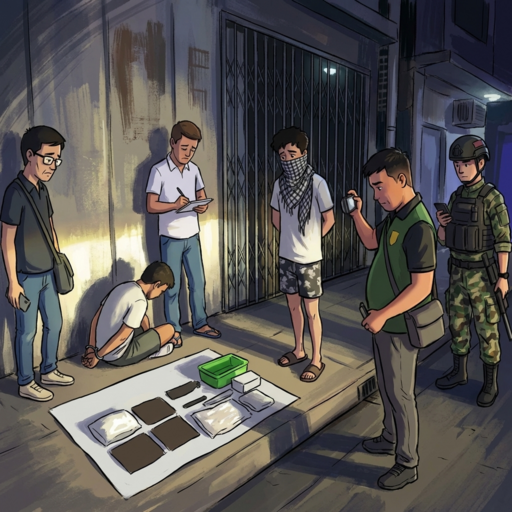
- Arrest and seizure: Once the suspect presents or exchanges the illegal drugs, officers move in to arrest the individual. The drugs, marked money, and other items related to the transaction are confiscated as evidence.
- Documentation and evidence handling: Authorities document the seized items, photograph the evidence, and prepare reports about the operation. These records are used during the legal process that follows the arrest.
The objective of a buy-bust operation is to catch suspects during the act of selling illegal drugs. This direct observation of a transaction helps establish evidence that prosecutors may use when filing charges under Philippine drug laws.
Which agencies carry out buy-bust operations in the Philippines?
Several law enforcement agencies in the Philippines are authorized to conduct buy-bust operations as part of anti-drug enforcement efforts. These agencies often work together during coordinated operations.
- Philippine Drug Enforcement Agency (PDEA): PDEA is the primary government agency responsible for enforcing drug laws and coordinating anti-drug operations nationwide. It frequently leads major drug enforcement activities.
- Philippine National Police (PNP): The PNP conducts buy-bust operations through its anti-drug units and local police stations. Police officers may coordinate with PDEA when carrying out operations.
- Local anti-drug task forces: Some cities and provinces operate special units that assist national agencies in targeting drug distribution networks.
- Inter-agency operations: In certain cases, multiple agencies cooperate in joint operations that combine intelligence resources and personnel.
Cooperation between different agencies allows law enforcement to coordinate intelligence and carry out operations in various regions. In many reported cases, buy-bust operations involve teams from both national agencies and local police units working together.
Why are buy-bust operations commonly used in drug enforcement?
Buy-bust operations are widely used because illegal drug transactions are difficult to investigate without direct evidence of a sale. Unlike other crimes, drug distribution often takes place in private settings or through informal networks. This makes undercover operations a practical method for gathering evidence.
By posing as buyers, law enforcement officers can observe and document the exchange of illegal substances. This approach allows authorities to collect physical evidence such as seized drugs and marked money, which may be presented during court proceedings.
The method is also used to identify individuals who are actively selling drugs in specific locations. In many cases reported in the Philippines, buy-bust operations target suspected dealers operating in residential areas, entertainment districts, or transportation hubs.
Authorities may also use information gathered during these operations to investigate broader drug distribution networks. Evidence obtained from one arrest can sometimes lead to additional investigations involving other suspects.
Because of these factors, buy-bust operations remain a common enforcement method in anti-drug campaigns throughout the Philippines.
Frequently Asked Questions
Are buy-bust operations legal in the Philippines?
Yes. Buy-bust operations are conducted under the legal framework provided by the Comprehensive Dangerous Drugs Act of 2002, which allows authorities to investigate and arrest individuals involved in illegal drug activities.
What happens after a suspect is arrested in a buy-bust operation?
After an arrest, authorities document the seized evidence, file reports about the operation, and submit the case to prosecutors. Suspects may undergo inquest proceedings and face charges related to the sale or possession of illegal drugs.
Which drugs are commonly involved in buy-bust operations?
Many reported buy-bust operations in the Philippines involve shabu, the local term for methamphetamine hydrochloride. However, operations may also involve other controlled substances regulated under Philippine drug laws.


Join the discussion
What do you think? Drop your thoughts below.