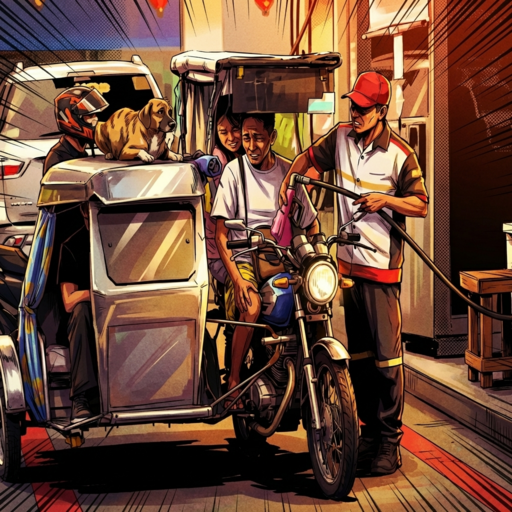
Crisis body formed to act on fuel, food shortages; Nation on brink as oil crisis threatens economy
Malacañang has formed a 'crisis committee' to address impending fuel and food shortages amidst the ongoing Iran war. Energy Secretary Sharon Garin warned of a 'worst-case scenario' of fuel depletion in 50-60 days. While new fuel price hikes are expected, authorities foresee an easing trend, alongside a new round of cash aid for public utility vehicle drivers.
President Ferdinand "Bongbong" Marcos Jr. has ordered the creation of a crisis committee to address fuel and food supply concerns amid the ongoing Middle East conflict affecting global oil distribution. The committee's composition is still being finalized, with the focus on managing price pressures from the Iran-related war disrupting global energy markets, rather than domestic shortages. Energy Secretary Sharon Garin has warned that fuel supply depletion represents a greater risk than rising pump prices, stating in an ANC interview on March 21, 2026: "Worst case really is we won't have enough, or we won't have any." She emphasized that "It is far worse to have no diesel at all than to have it at a high price." However, Malacañang clarified that Marcos' prior mention of an "oil crisis" referred to the Middle East situation, not the Philippines, where supply disruptions are not currently occurring.
Energy Secretary Garin noted that while current fuel stocks are adequate for April, the government is negotiating additional imports of 440,000 barrels followed by 600,000 barrels to bolster reserves. The government has contingency plans including government procurement of 1-2 million barrels. Palace Press Officer Claire Castro stated there are two types of crises—supply and price—and while currently there is no supply crisis, there is price disruption due to the Middle East oil crisis. Diesel prices have increased to over P100 per liter over the past two weeks.
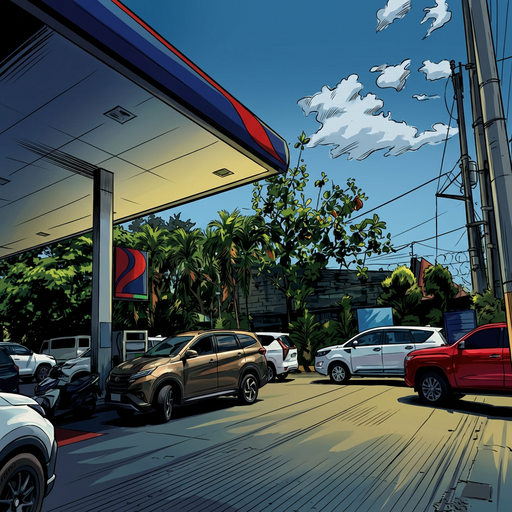

President Marcos assured that fuel supply remains stable and that National Government programs will cushion the effects of the Middle East turmoil. He pledged continued assistance to drivers, operators, fishermen, and farmers affected by oil price increases, and prevented fare hikes in public utility vehicles to help mitigate impacts. The government awaits Congress' transmittal of an emergency powers bill allowing Marcos to suspend or reduce fuel excise taxes, alongside cash assistance for public utility drivers affected by higher fuel and food prices.
The crisis committee will oversee government efforts to ensure stable food and fuel supplies, with relief measures including tranched aid from the Department of Social Welfare and Development. Locally, Baguio City has formed its own crisis committee to prioritize fuel for essential sectors like food distributors, hospitals, and emergency services. The Philippines is set to receive a fresh diesel supply despite the ongoing conflict continuing to affect global oil distribution, with the government emphasizing that there is no rationing of fuel despite supply concerns.
Join the discussion
What do you think? Drop your thoughts below.