
Middle East War Escalates: Oil Prices Soar as Iran Strikes Gulf Energy Sites; Missile Causes 'Extensive Damage' in Qatar
The Middle East conflict intensifies, sending oil prices soaring after Israeli strikes on Iranian facilities. Iran retaliated by targeting Gulf energy sites, with a ballistic missile causing 'extensive damage' at Qatar's Ras Laffan, a major gas field. This escalation follows recent killings of Iranian intelligence and security chiefs.
On March 18, 2026, a major escalation occurred in the Middle East conflict when Iran launched missile and drone strikes targeting Gulf energy sites in retaliation for the assassination of Iranian intelligence chief Esmail Khatib and other leaders. The most significant attack was a ballistic missile strike on Qatar's main gas facility at the shared South Pars field (also known as the North Field), causing extensive damage from a fire. Qatar's state energy company reported substantial damage to its primary facility, leading Qatar to expose Iranian diplomats in response. The attacks followed Israeli strikes on Iranian facilities earlier in the conflict.
Iranian President Masoud Pezeshkian warned of 'uncontrollable consequences' from attacks on the world's largest gas reserve and issued specific threats against five Gulf energy sites: Samre refinery (Saudi Arabia), Jubail petrochemical complex (Saudi Arabia), Al-Hosn gas field (UAE), Masai petrochemical complex (Qatar), and Ras Laffan refinery (Qatar). Saudi Arabia successfully intercepted drones aimed at eastern energy sites and downed a ballistic missile, with debris landing near a Riyadh refinery.

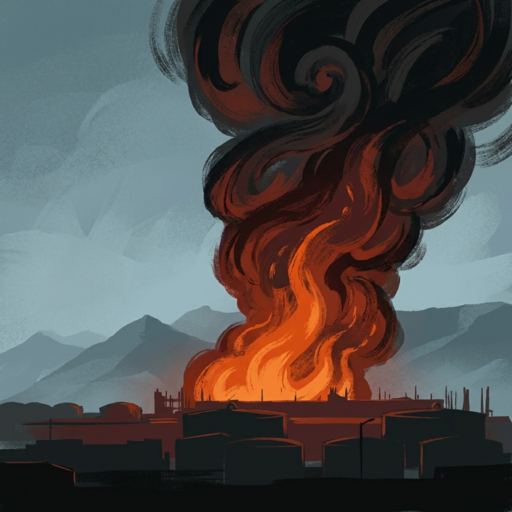
Philippine news sources including GMA, ABS-CBN, Inquirer, and Philstar extensively covered the event, reporting that the attack on Qatar's LNG facility occurred around 2 AM local time, damaging storage tanks but not causing long-term production disruption. Qatar's Energy Minister stated 'Sabotage attempt foiled; operations resuming soon.' The Houthis claimed responsibility for the drone attack via Telegram, calling it a 'precise strike' on the Ras Laffan facility, though Iran denied direct involvement.
The immediate consequence was a significant spike in global oil prices as Gulf facilities—critical to world energy supply—faced direct threats. Brent crude oil prices jumped approximately 2% following the attacks. Regional tensions escalated further with Israel vowing to continue targeting Iranian leaders, and Hezbollah firing rockets at Israel. The conflict has caused numerous casualties in Iran, Lebanon, and Iraq, with widespread evacuations in Lebanon toward Sidon. For the Philippines, the Department of Foreign Affairs began monitoring the situation for over 400,000 OFWs in Qatar and UAE, warning of potential fuel price increases of P1-2 per liter in the Philippines and possible delays in Gulf remittances if tensions worsen.


Join the discussion
What do you think? Drop your thoughts below.