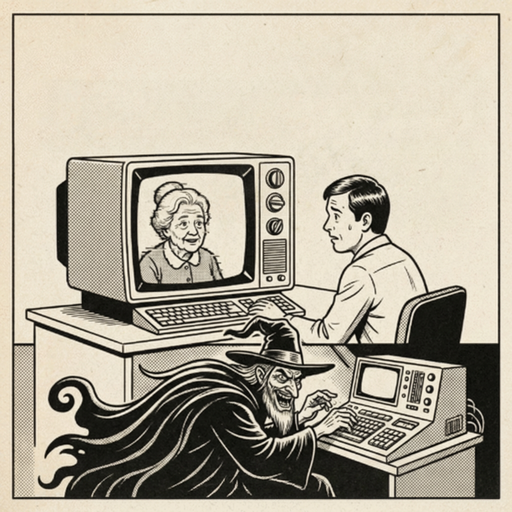
The era of crime-as-a-service operations has come
The rise of deepfakes has ushered in a terrifying 'crime-as-a-service' era, where identities can be copied with alarming accuracy. Security data from 2025 reveals that the problem is far more widespread than realized, making it increasingly difficult to trust online interactions.
The rise of deepfakes has ushered in a 'crime-as-a-service' era where cybercriminals can easily access AI tools to create sophisticated synthetic media for fraud and deception. In 2025, deepfake-as-a-service (DaaS) emerged as a major component of crime-as-a-service (CaaS) operations, enabling even low-skilled attackers to launch convincing scams at scale. Global security data revealed explosive growth, with deepfake content surging from 500,000 in 2023 to 8 million by 2025, representing a 900% annual increase. Fraud attempts using deepfakes spiked 3,000% in 2023 alone, continuing into 2025, with North America experiencing $200 million in Q1 2025 losses and a 1,740% growth rate.
In the Philippines, deepfake-related crimes saw dramatic increases, with a 4,500% rise in deepfake fraud since 2023. A notable incident involved a doctor losing ₱93 million in October 2025 to an investment scam that used a deepfake video of President Ferdinand Marcos Jr. The third quarter of 2025 saw a 49% surge in Philippine cyberattacks, with 52 million credentials exposed in data breaches and 7,656 phishing attacks reported. The Cybercrime Investigation and Coordinating Center (CICC) detected 200-300 deepfakes daily ahead of the May 2025 mid-term elections, prompting warnings about election interference.

Key incidents included the use of deepfakes for business email compromise, executive impersonation, and bypassing identity verification systems, particularly targeting financial, crypto, and fintech sectors where 88% of deepfake fraud occurred. In June 2025, Senator Ronald 'Bato' Dela Rosa shared a deepfake video supporting Vice President Sara Duterte during her impeachment trial, raising concerns about political disinformation. The Philippines also faced AI-powered financial crimes involving deepfakes and money mules targeting healthcare and financial sectors.
Government responses included the proposed 'Anti-Deepfake Act of 2025' to penalize malicious deepfake creation and distribution, and a separate House bill targeting AI-generated sexual abuse content. The CICC acquired deepfake detection software with 95% accuracy within 30 seconds for election monitoring and broader threat detection. In early 2026, the Philippines temporarily restricted then reinstated AI chatbot Grok over concerns about deepfake image generation risks. The Department of Information and Communications Technology coordinated with CICC to address generative AI tool concerns amid rising deepfake threats.

Join the discussion
What do you think? Drop your thoughts below.