Vatican expresses regret to Israel over Holy Sepulchre blocking
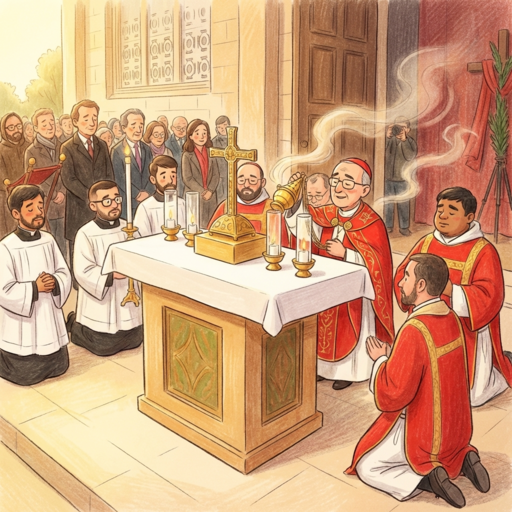
The Vatican has expressed its "regrets" to Israel's ambassador after an attempt to stop the Latin Patriarch of Jerusalem from accessing the Church of the Holy Sepulchre on Palm Sunday, raising concerns over religious freedom.
On March 29, 2026, Israeli police blocked Cardinal Pierbattista Pizzaballa, the Latin Patriarch of Jerusalem, and Franciscan Father Francesco Ielpo from entering the Church of the Holy Sepulchre to celebrate Palm Sunday Mass. This marked the first time in centuries that senior Catholic leaders were prevented from accessing the holy site on Palm Sunday. The incident occurred despite the leaders traveling privately without any procession, following the earlier cancellation of the traditional Palm Sunday procession from the Mount of Olives into Jerusalem due to security concerns.
The Latin Patriarchate of Jerusalem and Custody of the Holy Land issued a joint statement expressing "deep regret" to Christians worldwide and called the police action a "grave precedent" and "manifestly unreasonable." They emphasized that this disruption occurred on one of Christianity's holiest days. Israeli authorities cited wartime security restrictions and safety concerns related to the ongoing Israel-US war in Iran that began on February 28, 2026, as justification for the restrictions.

Diplomatic responses followed swiftly. The Vatican summoned Israel's ambassador and expressed its "regrets" over the incident. Italian Prime Minister Giorgia Meloni called it an "attack on believers," while Foreign Minister Antonio Tajani deemed it "unacceptable." Israeli President Isaac Herzog personally called the church leaders to convey sorrow, attributing the incident to missile risks from Iran and reaffirming Israel's commitment to religious freedom and the status quo at holy sites.
Israeli Prime Minister Benjamin Netanyahu's office stated there was no malicious intent behind the blocking and announced plans to develop a solution to enable worship at the site during Holy Week. The Holy Sepulchre, along with the Western Wall and Temple Mount, had been closed to the public since late February due to the conflict. Pope Leo XIV prayed for Middle Eastern Christians unable to fully observe Holy Week rites during his Angelus in St. Peter's Square, highlighting the broader impact of regional tensions on religious observance.
Join the discussion
What do you think? Drop your thoughts below.