
Analyst says PH already in ‘economic emergency’ amid fuel price surge
A policy analyst declared the Philippines in an 'economic emergency' due to surging fuel prices, urging immediate suspension of fuel taxes and consideration of a wealth tax to mitigate the burden on Filipinos.
In March 2026, the Philippines faced severe fuel price surges driven by Middle East tensions and the Iran crisis, prompting policy analysts to declare the country in an 'economic emergency.' Noel M. Baga, co-convenor of the Center for Energy Research and Policy (CERP) think tank, stated that any government action should start with declaring a State of Calamity to address the crisis. Baga emphasized that the 28-year-old Oil Deregulation Law needs revisiting to strengthen energy security while maintaining market competitiveness, as the country's heavy reliance on imported Middle Eastern crude exposes it to international price fluctuations and supply disruptions.
President Ferdinand Marcos Jr. sought emergency powers from Congress to suspend or reduce excise taxes on fuel, with the bill certified as urgent in early March. However, Malacañang spokesperson Claire Castro stated on March 17-18 that no state of national emergency was needed yet, though she acknowledged that emergency declarations or wage hikes 'pwedeng mangyari' (could happen) if required. The Palace pushed back against calls for declaring a national emergency that would allow temporary government control of the oil industry.
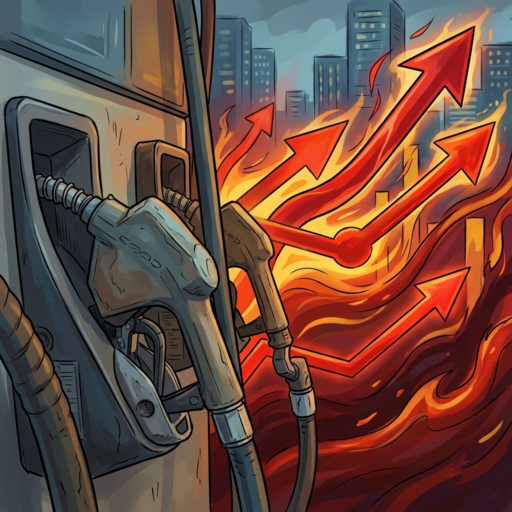
Fuel prices were projected to rise dramatically, with diesel expected to increase by P13-P15 per liter (or up to P20.40-P23.90 in some estimates), gasoline by P10-P12 (or up to P16.20), and kerosene by P6-P6.90. Potential pump prices could reach P95-P114 per liter for diesel and up to P91.60 for gasoline. Gas stations began limiting purchases to prevent hoarding, despite the Department of Energy assuring sufficient supply until late April.
The economic impacts were significant, with the oil shock potentially pushing 2026 inflation above 4% (baseline 3.9-4.1%), trimming GDP growth by 0.2-0.3%, and eroding purchasing power. Labor groups like the Trade Union Congress of the Philippines and business leaders urged government intervention, including tax suspension or price absorption. The government planned to buy 2 million barrels of oil to build strategic stocks, while massive demonstrations against price spikes were reported on March 19, 2026.
Baga proposed long-term solutions including establishing a strategic petroleum reserve through a strengthened Philippine National Oil Company (PNOC) to allow consumers to draw fuel at subsidized prices during supply disruptions. He stressed that energy independence remains essential to resolve recurring vulnerabilities, reflecting CERP's policy framework of prioritizing energy security first, then affordability, and finally sustainability in the country's energy strategy.
Join the discussion
What do you think? Drop your thoughts below.