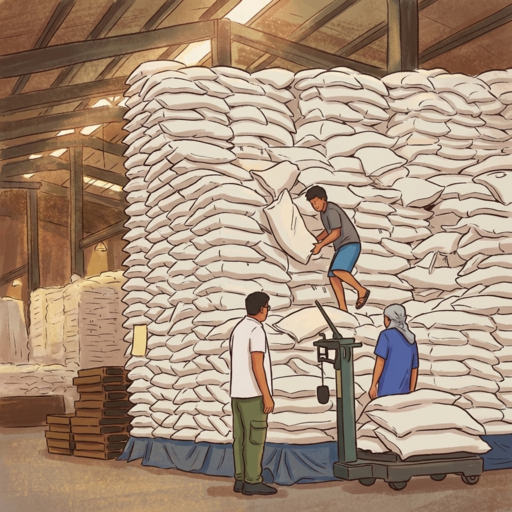
Global Rice Prices Begin Ascent, Raising Concerns for Philippine Food Security
International rice prices have started to increase, with the UN's FAO All Rice Index showing a marginal rise in February. This development signals potential challenges for global food security and raises concerns for the Philippines, a major rice consumer, regarding future supply and affordability of its staple grain.
The FAO All Rice Price Index averaged 103.2 points in February 2026, showing a marginal 0.4% increase from January but remaining 2.5% below its February 2025 level. This slight uptick was driven primarily by higher prices for Japonica rice (up 3.7% month-on-month) due to strong Far Eastern demand for Calrose varieties and tight supplies in Vietnam, and fragrant rice (up 1.8%) supported by basmati gains in Pakistan. However, this modest increase followed a period of declining prices, with the index having fallen from 133.1 in 2024 to 103.5 in 2025 overall. The Philippines has faced ongoing food security challenges related to rice pricing, with excessive importation significantly impacting domestic farming profitability. In 2024, farm-gate palay prices plummeted to between P14 and P16 per kilo due to oversupply, though they recovered to P17.70 per kg by 2025. The country recorded unprecedented rice import arrivals of 48 million metric tons in 2024, exceeding requirements by 1 to 1.2 million MT, which undermined rice farmer profitability and production incentives. Global rice production is forecast at a record 543 million tonnes for 2024/25, boosted by strong prospects in India, Cambodia, and Myanmar, with cereal utilization up 1% year-on-year due to record rice consumption.





Join the discussion
What do you think? Drop your thoughts below.