
PH Gov't Expands Cash Aid to PUV Drivers, Repatriates Filipinos Amid Middle East Crisis; Power Rates to Increase
Amid the Middle East conflict's economic fallout, President Marcos Jr. expanded P5,000 cash assistance to PUV drivers outside NCR, while the ERC forecasts electricity rate increases. Simultaneously, OWWA reports 343 Filipinos from the Middle East are expected to arrive, with 25 from Israel already home.
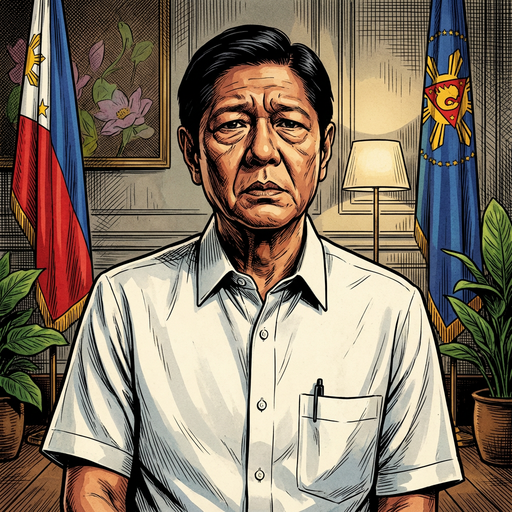
The Philippine government is implementing a multi-pronged response to the economic fallout from the Middle East conflict, focusing on cash assistance for transport workers, repatriation of Filipinos, and addressing impending electricity rate increases. President Ferdinand Marcos Jr. has directed the Department of Social Welfare and Development (DSWD) to expand the P5,000 cash assistance program to public utility vehicle (PUV) drivers outside the National Capital Region, following an initial rollout in Metro Manila that began on March 24, 2026. The assistance targets various transport sectors including transport network vehicle service (TNVS) drivers, public utility jeepney (PUJ) drivers, delivery riders, and motorcycle taxi drivers, with distribution scheduled through late March. This expansion comes after over 90,000 tricycle drivers received aid last week, with the DSWD allocating P30 billion total for the program.
Simultaneously, the Department of Migrant Workers (DMW) and Overseas Workers Welfare Administration (OWWA) are managing repatriation efforts for Filipinos affected by the Middle East crisis. While specific figures of 343 Filipinos expected to arrive and 25 from Israel already home were not confirmed in recent reports, the government has supported the return of over 1,600 Filipinos from the region as of mid-March 2026. President Marcos reported that 1,416 Filipinos had requested repatriation, including 586 from Dubai, 297 from Israel, and 270 from other areas. However, repatriation faces challenges due to airspace and airport closures, with no mass repatriation ordered for the approximately 2.4-2.5 million Filipinos in the region.
The Energy Regulatory Commission (ERC) has forecast electricity rate increases for 2026, approving additional charges for renewable energy-powered plants and increasing the feed-in tariff (FIT-All) allowance to PHP0.20/kWh. These adjustments follow earlier rate hikes in 2024-2025, where Luzon consumers faced P0.12/kWh increases for three months starting January 2025. The ERC chair warned that global oil price spikes, exacerbated by Middle East tensions including Iran's attacks in the Persian Gulf, could raise spot market electricity prices by up to P4 per kWh, with the commission considering staggered adjustments to mitigate sharp increases.
These interconnected developments reflect the Philippine government's comprehensive response to the regional crisis's economic impact. The cash assistance program aims to cushion transport workers from fuel price hikes, while repatriation efforts address safety concerns for overseas Filipinos. The electricity rate forecasts highlight broader inflationary pressures from the conflict, with the ERC working to balance energy security with consumer protection amid volatile global markets.


Join the discussion
What do you think? Drop your thoughts below.